
Laptop Buyback Programs: How to Maximize Value Throughout the IT Asset Lifecycle
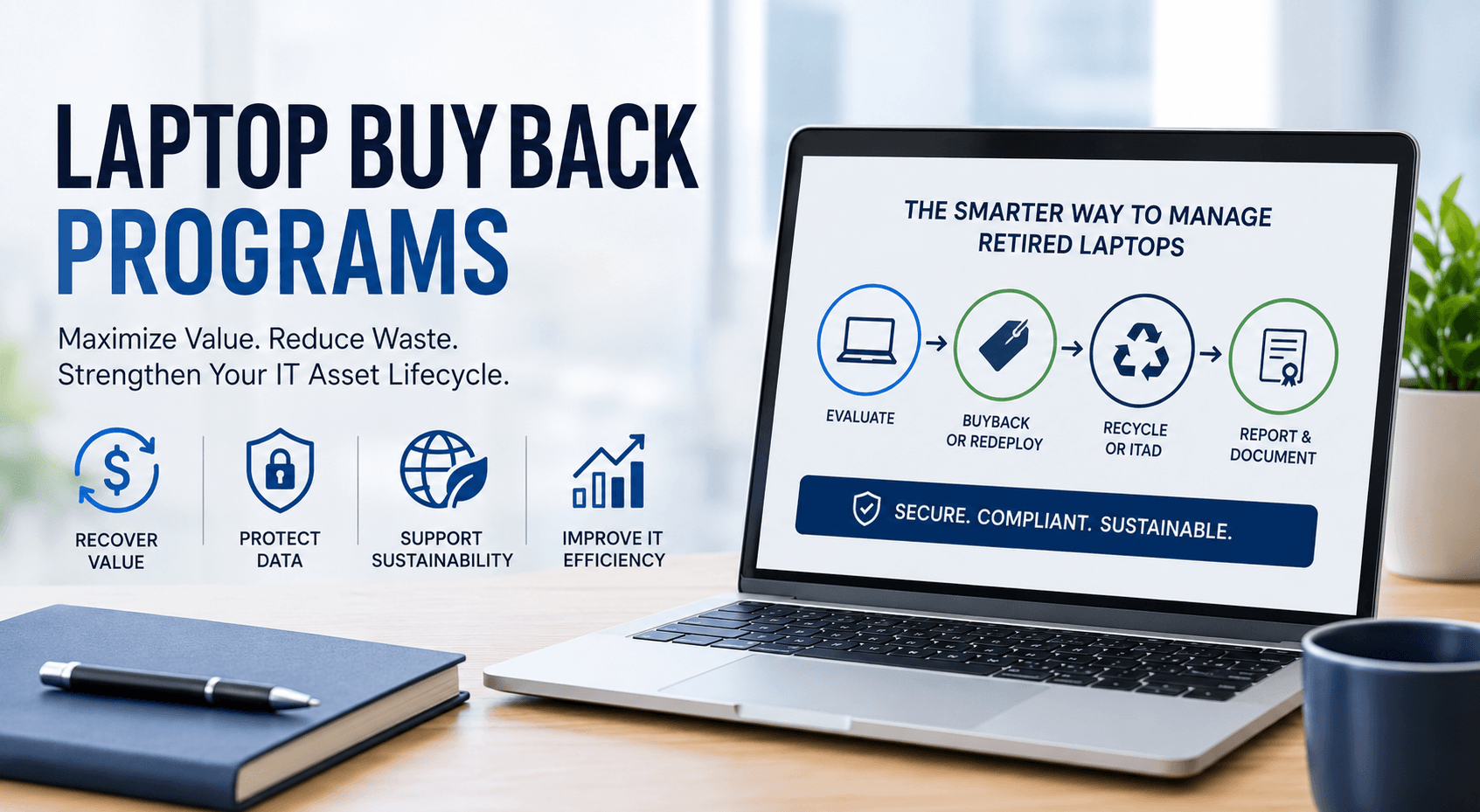
Many organizations replace laptops every three to five years, but that doesn't mean those devices have reached the end of their useful life.
As organizations look for ways to improve sustainability efforts, reduce e-waste, and maximize the value of existing technology assets, laptop buyback programs are becoming increasingly common. Rather than treating retired laptops as equipment that no longer has value, organizations are looking for ways to recover more from existing technology assets.
Successfully managing retired laptops involves more than deciding whether to sell them. Organizations need a consistent process for evaluating every device, protecting sensitive data, determining the most appropriate lifecycle path, and ensuring technology assets continue delivering value after they are removed from active use.
In this guide, we'll explore how laptop buyback programs work, how organizations recover value from retired devices, key considerations when evaluating buyback options, and where buyback programs fit within a broader IT asset lifecycle strategy.
What Are Laptop Buyback Programs?
Laptop buyback programs allow organizations to recover value from retired devices by selling eligible laptops after they have been removed from active use. Rather than automatically recycling or disposing of retired equipment, organizations can determine whether a laptop buyback program is the most appropriate next step for eligible devices.
Not every retired laptop is a good candidate for a buyback program. Devices with strong resale value may be sold through buyback, while others may be better suited for redeployment or IT asset disposition. Selecting the appropriate lifecycle path helps organizations maximize the value of each retired device while ensuring equipment is managed in the most effective way.
Laptop buyback programs are one component of a broader strategy for managing retired technology assets. This structured approach helps organizations maximize the value of existing technology assets, improve asset visibility, reduce unnecessary waste, and support a more effective IT asset lifecycle strategy.
Laptop Buyback Programs vs IT Asset Disposition (ITAD)
Laptop buyback programs and IT asset disposition (ITAD) serve different purposes within the IT asset lifecycle. Laptop buyback programs are intended for devices that still retain resale value, while ITAD is designed for equipment that has reached the end of its useful life and requires secure retirement.
Rather than choosing one approach over the other, many organizations use both. Devices with resale potential may be directed to a laptop buyback program, while end-of-life equipment is processed through ITAD to support secure data destruction, regulatory compliance, and environmentally responsible recycling.
The appropriate path depends on each device's condition, remaining value, and future use. Evaluating retired laptops individually allows organizations to recover value where appropriate while ensuring equipment that is no longer suitable for reuse is managed securely and responsibly.
| Laptop Buyback Programs | IT Asset Disposition (ITAD) |
|---|---|
| Recovers value from eligible devices | Securely retires end-of-life devices |
| Extends the useful life of equipment | Ends the device lifecycle |
| Best for devices with resale value | Best for devices without resale value |
| Supports sustainability through reuse | Supports sustainability through responsible recycling |
| Recovers a portion of the original technology investment | Focuses on compliance and secure disposal |
What Determines Laptop Buyback Value?
Several factors influence how much value an organization can recover through a laptop buyback program, including a laptop's age, condition, hardware specifications, current market demand, and how long it remains out of active use before being evaluated. Understanding these factors helps organizations maximize the value recovered from retired technology assets while making more informed disposition decisions.
Age and Device Condition
Newer business laptops that have been well maintained typically retain more resale value than older devices or equipment with significant cosmetic or functional damage. Device age and overall condition are two of the primary factors considered during a laptop buyback evaluation.
Hardware Specifications
Hardware specifications such as the processor, memory, storage, and overall system performance play an important role in determining buyback value. Devices with newer business-class hardware generally retain stronger resale potential.
Current Market Demand
Buyback values fluctuate based on market demand. Some laptop models retain stronger resale value because they continue to meet the needs of businesses and secondary buyers, while others lose value more quickly as newer models become available.
Timing and Storage
The amount of time retired laptops remain out of active use can significantly affect buyback value. Organizations that evaluate and process retired devices soon after they are removed from service are often better positioned to recover value before continued depreciation reduces resale opportunities.
Laptop Buyback Programs in Practice: Real-World Scenarios and Outcomes
Laptop buyback programs are most commonly used when large numbers of laptops are removed from active service at the same time. Common situations include device refresh projects, office consolidations, mergers and acquisitions, hardware standardization initiatives, remote workforce transitions, and the management of surplus laptop inventory.
Scenario: Technology Refresh After a Four-Year Laptop Lifecycle
Consider a mid-sized professional services firm with approximately 600 employees completing a planned technology refresh, replacing four-year-old business laptops across the organization. Rather than routing every retired device directly to recycling, the IT team evaluated each laptop to determine the most appropriate lifecycle path.
The evaluation considered each laptop's age, condition, hardware specifications, and current secondary market demand. Approximately 380 laptops were identified as suitable for a laptop buyback program, while the remaining 220 devices, including those with significant wear, older hardware, or functional issues, were directed to IT asset disposition for secure data destruction and environmentally responsible recycling.
By processing eligible devices through a laptop buyback program before continued depreciation reduced their resale value, the organization recovered a meaningful portion of its original technology investment. The proceeds helped offset the cost of the technology refresh. The organization also maintained full chain-of-custody documentation throughout the process, supporting security, compliance, and audit requirements while maximizing the value recovered from retired technology assets.
Scenario: Office Consolidation or Facility Closure
Consider an organization consolidating several office locations into a smaller regional footprint. As employees relocate or transition to new work arrangements, approximately 450 company laptops are returned to the IT department over a six-week period. Rather than placing every returned device into storage, the IT team evaluates each laptop individually to determine the most appropriate lifecycle path.
Of the 450 laptops returned, approximately 240 devices still have sufficient market value and are directed to a laptop buyback program. Another 140 laptops continue to meet the organization's performance requirements and are prepared for redeployment to new employees and other office locations. The remaining 70 devices, which have reached the end of their useful life or no longer meet business requirements, are securely processed through IT asset disposition for data destruction and environmentally responsible recycling.
By evaluating returned laptops shortly after collection, the organization avoids unnecessary storage costs, reduces continued depreciation, and recovers value from devices that might otherwise remain unused. The structured process also maintains complete visibility into every retired device while supporting security, compliance, and chain-of-custody requirements.
Scenario: Merger or Acquisition Integration
Consider an organization that acquires another company and begins standardizing its technology environment across the combined business. During the integration process, approximately 850 laptops are evaluated to determine which devices meet the organization's hardware, security, and performance standards.
Of the 850 laptops reviewed, approximately 310 devices continue to meet the organization's standards and remain in service. Another 340 laptops retain sufficient market value and are directed to a laptop buyback program. The remaining 200 devices, which no longer meet business requirements or have reached the end of their useful life, are securely processed through IT asset disposition for data destruction and environmentally responsible recycling.
By evaluating every retired laptop as part of the integration process, the organization recovers value from equipment that is no longer needed while eliminating duplicate hardware inventories. The structured approach also helps accelerate technology standardization, simplify ongoing IT support, and maintain complete asset records that support security, compliance, and audit requirements.
Scenario: Managing Surplus Laptop Inventory
Consider an organization that has accumulated approximately 700 retired laptops over several years following employee departures, device refreshes, and office relocations. Many of the devices have remained in storage because there has never been a consistent process for evaluating them. As time passes, IT teams have limited visibility into which laptops still have resale value, which could be redeployed, and which have reached the end of their useful life.
Rather than continuing to store every device, the IT team conducts a comprehensive inventory review and evaluates each laptop based on its age, condition, hardware specifications, and current secondary market demand. Of the 700 laptops, approximately 280 devices are identified as suitable for a laptop buyback program, while 210 laptops continue to meet business requirements and are prepared for redeployment. The remaining 210 devices, which no longer meet performance or security requirements, are securely processed through IT asset disposition for data destruction and environmentally responsible recycling.
By reviewing surplus inventory as part of a structured IT asset lifecycle strategy, the organization recovers value from equipment that might otherwise continue depreciating in storage. The evaluation also improves asset visibility, reduces unnecessary storage requirements, and helps ensure every retired laptop follows the lifecycle path that best aligns with its condition, remaining value, and business needs.
Key Considerations Before Choosing a Laptop Buyback Program
Choosing the right laptop buyback program involves evaluating more than the value offered for retired devices. Organizations should also consider how providers protect company data, manage logistics, provide asset visibility, support compliance requirements, and integrate with their broader IT asset lifecycle strategy.
Secure Data Sanitization
Protecting company data should be one of the first considerations when evaluating a laptop buyback program. IT teams should understand how devices are sanitized, whether recognized data destruction standards such as NIST 800-88 are followed, and what documentation is provided to verify that sensitive information has been securely removed before a device is resold, recycled, or otherwise repurposed.
Logistics and Asset Tracking
Managing retired laptops involves more than shipping devices from one location to another. Organizations should look for programs that provide shipment tracking, a documented chain of custody, and clear visibility into the status of every device throughout the process. Strong logistics help reduce delays, improve accountability, and ensure devices are managed consistently from collection through final disposition.
Reporting and Asset Visibility
Visibility into retired technology assets is essential for effective IT asset management. Organizations should understand what reporting is available throughout the buyback process, including which devices have been received, evaluated, purchased, redeployed, recycled, or sent for IT asset disposition. Detailed reporting helps support internal recordkeeping, audits, and future technology planning.
Transparent Valuation
Organizations should understand how buyback values are determined before selecting a provider. A transparent evaluation process helps set realistic expectations, supports internal decision-making, and provides greater confidence that retired technology assets are being assessed consistently and fairly.
Compliance and Environmental Responsibility
Organizations should understand how devices that are not suitable for resale are managed and whether environmentally responsible recycling practices are followed. It's also important to evaluate how a provider supports applicable compliance requirements and provides documentation for data destruction, recycling, and other asset disposition activities.
Lifecycle Support
Laptop buyback programs are most effective when they are part of a broader IT asset lifecycle strategy rather than a standalone service. Decision-makers should evaluate whether a provider also supports services such as device retrieval, warehousing, redeployment, and IT asset disposition so every retired device can be directed to the most appropriate outcome based on its condition, value, and business needs.
How Laptop Buyback Evaluations Work: A Technical Reference
Before assigning a buyback value, most laptop buyback providers follow a structured evaluation process to determine a device's condition, functionality, and resale potential. While evaluation methods vary by provider, the process is designed to help organizations determine whether a laptop is best suited for a laptop buyback program, internal redeployment, or IT asset disposition.
The evaluation typically combines asset verification, physical inspection, functional testing, and hardware verification to provide a complete picture of each device before a buyback value is assigned. Although evaluation criteria vary by provider, many laptop buyback programs classify devices into condition categories to help ensure evaluations are performed consistently and buyback values are assigned fairly.
Asset Verification
Before the evaluation begins, providers typically verify the laptop's identity using information such as the serial number, model, and hardware configuration. Confirming this information helps ensure the correct device is evaluated, supports accurate inventory records, and maintains traceability throughout the buyback process.
Physical Inspection
The evaluation continues with a physical inspection of the laptop to assess its overall condition. While the specific criteria may vary by provider, the inspection typically includes evaluating:
Exterior housing and chassis
Screen condition
Keyboard and trackpad
Ports and connectors
Battery functionality and overall condition
Cosmetic wear such as scratches, dents, cracks, or missing components
Cosmetic damage does not automatically disqualify a laptop from a buyback program, but it may affect its resale value depending on the severity of the damage and current market demand.
Functional Testing
After the physical inspection, providers typically verify that the laptop is functioning properly. Functional testing commonly includes confirming that:
The device powers on successfully
The operating system boots correctly
The display functions properly
The keyboard and trackpad respond as expected
Wireless connectivity is operational
The webcam and speakers function correctly
External ports are working properly
Hardware failures or significant functional issues may reduce a laptop's resale value or make it a better candidate for redeployment or IT asset disposition.
Hardware Verification
Providers also verify the laptop's hardware configuration, including the model, processor, memory, storage capacity, and other key specifications. Combined with the device's physical condition and current secondary market demand, this information helps determine the laptop's estimated buyback value and whether it is likely to qualify for a laptop buyback program.
Evaluation Outcome
Once the evaluation is complete, the provider determines the most appropriate lifecycle path for the device. Laptops that retain sufficient resale value may qualify for a laptop buyback program, while others may be better suited for redeployment within the organization or secure retirement through IT asset disposition. A structured evaluation process helps ensure every retired laptop follows the lifecycle path that best aligns with its condition, remaining value, and business requirements.
Choosing Between Laptop Buyback and IT Asset Disposition
A Laptop Buyback Program Is Generally the Better Choice When:
The laptop retains measurable resale value.
The device remains fully functional or requires only minor repairs.
The hardware continues to meet current secondary market demand.
Company data can be securely sanitized before transfer.
The organization wants to recover value before continued depreciation reduces resale opportunities.
IT Asset Disposition (ITAD) Is Generally the Better Choice When:
The laptop has reached the end of its useful life.
The device has significant hardware failures or physical damage.
The hardware no longer meets business or secondary market requirements.
Secure data destruction and responsible end-of-life processing are required.
The device has little or no recoverable resale value.
Every retired laptop should be evaluated individually, as the appropriate lifecycle path depends on the device's condition, remaining value, security requirements, and the organization's overall IT asset lifecycle strategy.
Typical Depreciation Timelines for Business Laptops
Business laptops naturally lose resale value over time, making depreciation one of the most important factors influencing laptop buyback value. While depreciation rates vary by manufacturer, model, hardware specifications, physical condition, and current secondary market demand, organizations generally recover more value when retired laptops are evaluated soon after being removed from active service rather than remaining unused in storage for extended periods.
Factors that commonly influence business laptop depreciation include:
Device age – Older laptops generally have lower resale value than newer models with similar specifications.
Hardware generation – Newer processors, memory, and storage technologies typically remain competitive in the secondary market longer than older hardware.
Physical condition – Cosmetic damage and excessive wear can reduce a laptop's resale value even when the device remains fully functional.
Battery health and overall functionality – Devices that continue to operate reliably are generally more attractive to secondary buyers.
Operating system support – Laptops that support current operating systems and security updates often retain stronger resale potential.
Current secondary market demand – Changes in market demand can increase or decrease the value of specific laptop models over time.
As newer business laptops enter the market, older models generally become less competitive in the secondary market, reducing resale opportunities over time. Regularly evaluating retired laptops helps organizations identify buyback opportunities sooner, minimize unnecessary depreciation, and maximize the value recovered from eligible devices.
Documentation Organizations Should Expect to Receive
Organizations should understand what documentation is provided throughout the laptop buyback process. Comprehensive documentation helps support security, compliance, internal recordkeeping, and future technology planning while providing clear visibility into how retired devices were evaluated, processed, and managed.
Certificate of Data Destruction – Confirms that company data has been securely sanitized before devices are resold, redeployed, or otherwise processed. This documentation helps demonstrate that sensitive information has been removed using the provider's documented data sanitization process.
Chain of Custody Documentation – Provides a documented record of each device throughout the buyback process, helping organizations maintain accountability, support audit requirements, and verify how retired laptops were handled from collection through final disposition.
Asset Inventory Reports – Lists the devices received, evaluated, and processed, including identifying information such as serial numbers, hardware details, and each device's final lifecycle outcome.
Buyback Valuation Reports – Documents how eligible devices were evaluated and the value assigned to each laptop, providing transparency into the overall value recovered through the laptop buyback program.
Recycling and Disposition Documentation – Confirms how devices that were not suitable for buyback were securely processed through IT asset disposition or environmentally responsible recycling, when applicable.
The documentation provided may vary by provider, but organizations should understand what records will be available before selecting a laptop buyback program. Comprehensive reporting improves asset visibility, simplifies audits, supports compliance efforts, and helps organizations make more informed IT asset lifecycle decisions.
Minimum Hardware Requirements for Buyback
Laptop buyback providers typically evaluate a device's hardware specifications to determine whether it meets their current buyback criteria. While requirements vary by provider and current market demand, laptops with newer hardware and reliable performance generally retain stronger resale potential.
Providers commonly evaluate the following hardware characteristics:
Processor – Newer processor generations generally improve buyback eligibility and resale potential.
Memory (RAM) – Sufficient memory helps support current business applications and secondary market demand.
Storage – Laptops equipped with solid-state drives (SSDs) generally retain stronger resale potential than devices using older storage technologies.
Operating System Support – Devices capable of running supported operating systems and receiving current security updates typically remain eligible for resale longer.
Battery Health – Battery performance and overall functionality may influence a laptop's resale value.
Overall Functionality – Laptops that power on successfully and have fully functioning components are generally stronger candidates for a laptop buyback program.
Because hardware requirements and market demand change over time, buyback eligibility is typically determined through an individual device evaluation rather than a single hardware specification. This approach helps organizations identify which retired laptops are suitable for buyback while directing other devices toward redeployment or IT asset disposition when appropriate.
Where Laptop Buyback Programs Fit Within the IT Asset Lifecycle
Laptop buyback programs are one component of a broader IT asset lifecycle strategy. After laptops are removed from active use, organizations evaluate each device to determine whether it should be redeployed, sold through a laptop buyback program, or securely retired through IT asset disposition. Each retired laptop may follow a different lifecycle path depending on its condition, remaining value, and business requirements.
| IT Asset Lifecycle Stage | Purpose |
|---|---|
| Device Retrieval | Recover company-owned laptops from employees, offices, or other business locations. |
| Device Evaluation | Assess each laptop's condition, specifications, and remaining value to determine the most appropriate lifecycle path. |
| Redeployment | Prepare suitable laptops for continued internal use. |
| Laptop Buyback | Sell eligible laptops to recover value through resale. |
| IT Asset Disposition (ITAD) | Securely retire end-of-life devices through data destruction, environmentally responsible recycling, or disposal. |
Not every retired laptop moves immediately to its next lifecycle stage. Depending on business needs, devices may need secure laptop warehousing after retrieval or evaluation while awaiting redeployment, a laptop buyback program, or IT asset disposition. Warehousing provides organizations with flexibility, maintains visibility into retired technology assets, and helps ensure devices remain secure until their next lifecycle step.
Laptop buyback programs are most effective when they are integrated into a broader IT asset lifecycle strategy rather than managed as an isolated activity. Evaluating each retired laptop individually allows organizations to choose the lifecycle path that best aligns with its condition, remaining value, and business requirements. This approach helps maximize the value of existing technology assets, reduce unnecessary waste, and ensure retired devices are managed securely and responsibly.
Frequently Asked Questions
What should organizations do before preparing laptops for a buyback program?
Organizations should inventory retired devices, verify asset records, ensure company data is securely removed, and assess each laptop's condition before beginning the buyback process. A structured evaluation helps improve asset visibility while ensuring every device follows the most appropriate lifecycle path.
How do organizations protect company data before selling retired laptops?
Company data should be securely removed before any laptop is resold. Many providers follow recognized standards such as NIST 800-88 and provide documentation verifying that data sanitization has been completed before devices leave the organization's control.
Can organizations sell laptops in bulk through a buyback program?
Yes. Many organizations evaluate large numbers of retired laptops during device refresh projects, office consolidations, mergers, acquisitions, and hardware standardization initiatives. Bulk laptop buyback programs can help organizations recover value from eligible devices while simplifying the management of surplus technology assets.
Do laptops with cosmetic damage qualify for a buyback program?
It depends on the condition of the device and current market demand. Minor cosmetic wear may have little impact on buyback eligibility, while significant damage can reduce resale value or make a laptop better suited for redeployment or IT asset disposition.
What happens to laptops that do not qualify for a buyback program?
Laptops that do not qualify for buyback may still be suitable for redeployment, secure recycling, or IT asset disposition. Determining the most appropriate outcome depends on the device's condition, remaining value, and the organization's broader IT asset lifecycle strategy.
Can organizations redeploy some laptops while selling others through a buyback program?
Yes. Many organizations use both approaches as part of a broader IT asset lifecycle strategy. Devices with strong resale potential may be sold through a laptop buyback program, while laptops that continue to meet business requirements can be refreshed and redeployed within the organization.
Can organizations use laptop buyback programs and IT asset disposition (ITAD) together?
Yes. The two services complement one another within the IT asset lifecycle. Devices with resale value may be sold through a laptop buyback program, while end-of-life equipment that is no longer suitable for resale or redeployment can be securely processed through IT asset disposition.
Why are laptop buyback programs becoming more common?
Organizations are placing greater emphasis on reducing technology costs, supporting sustainability initiatives, and maximizing the value of existing technology assets. Rather than automatically recycling or disposing of retired laptops, many organizations now assess each device to determine whether a laptop buyback program, redeployment, or IT asset disposition is the most appropriate next step.
Can employees purchase their company laptop through a buyback program?
Some organizations allow employees to purchase retired company laptops as part of their IT asset management strategy, while others work with third-party buyback providers or direct devices to redeployment, resale, or IT asset disposition. The approach depends on company policies, security requirements, and business objectives.
What documentation should organizations expect to receive from a laptop buyback provider?
Organizations should understand what documentation will be provided throughout the laptop buyback process. Common documentation includes Certificates of Data Destruction, chain of custody records, asset inventory reports, buyback valuation reports, and recycling or disposition documentation for devices that are not suitable for resale. Comprehensive reporting supports security, compliance, audits, and effective IT asset lifecycle management.
What hardware requirements determine whether a laptop qualifies for buyback?
Buyback eligibility varies by provider and current market demand, but organizations typically evaluate factors such as the processor, memory, storage, operating system support, battery health, and overall functionality. Because hardware requirements change over time, eligibility is generally determined through an individual device evaluation rather than a single hardware specification.
Making Laptop Buyback Programs Part of Your IT Asset Lifecycle Strategy
Laptop buyback programs can help organizations recover value from retired technology assets, but successful outcomes begin with evaluating each device individually. Rather than applying the same outcome to every retired laptop, organizations should assess each device's condition, remaining value, hardware specifications, and business requirements before determining whether it should be redeployed, sold through a laptop buyback program, or securely retired through IT asset disposition.
By taking a structured approach to managing retired laptops, organizations can maximize the value of existing technology assets, reduce electronic waste, strengthen asset visibility, and make more informed decisions throughout the device lifecycle. As businesses continue to focus on controlling technology costs and improving sustainability, laptop buyback programs will remain an important component of an effective IT asset lifecycle strategy.